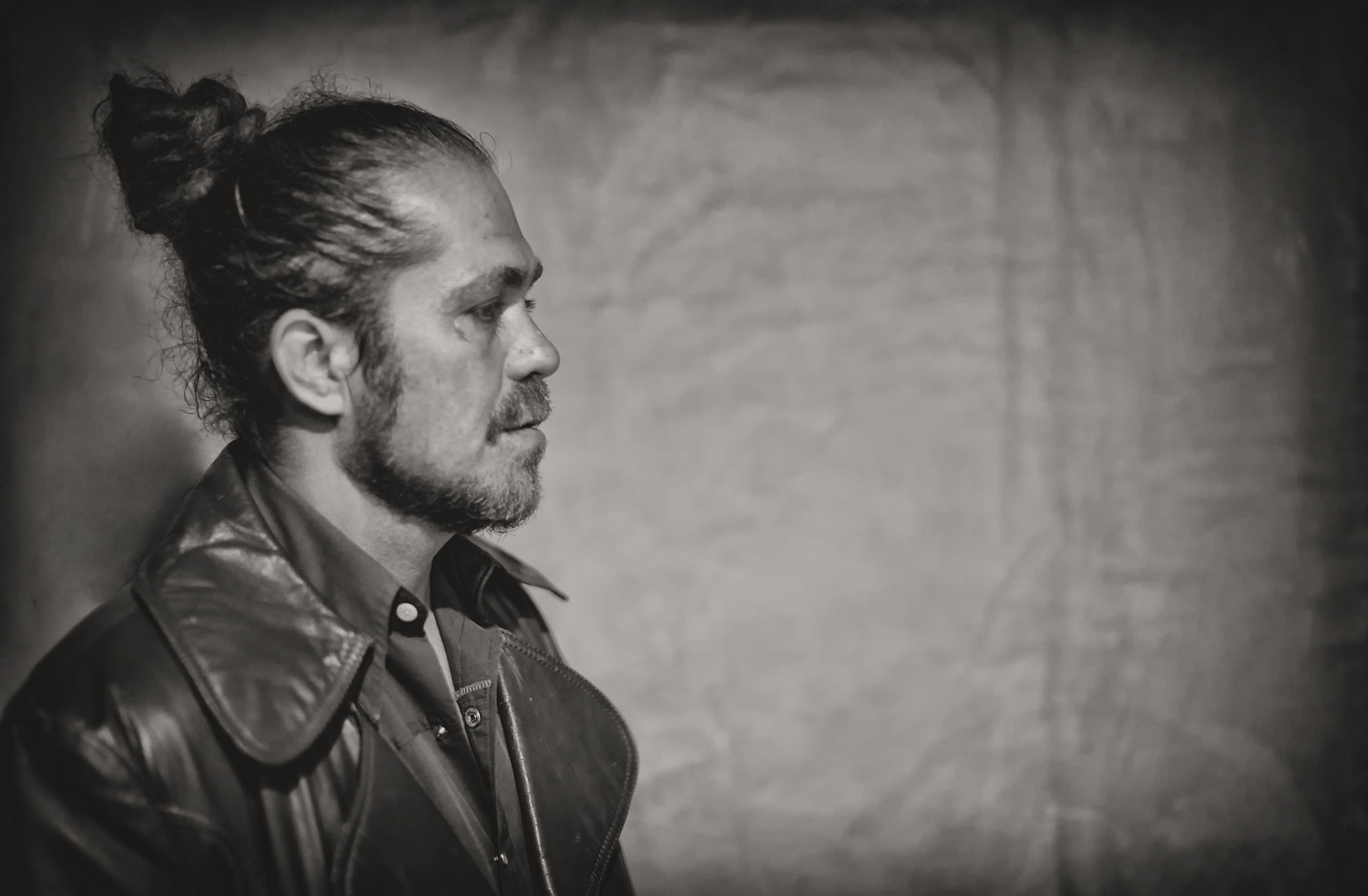
The title of Heroin and Helicopters, Citizen Cope’s first studio effort since 2012’s OneLovely Day, was inspired byan admonition from CarlosSantana. Cope, whose givenname is Clarence Greenwood,was performing in SanFrancisco, when he receivedthose words of caution.
“I was at The Fillmore when Carlos was thinking of using ‘Sideways’ for his next album [2002’s Shaman],” he recalls. “Carlos came to meet me, and in the course of that conversation said, ‘You gotta watch out for the two H’s.’ I said, ‘What’s that?’ And told me: ‘Heroin and helicopters—they don’t mix well with musicians.’ He was talking about the helicopter crashes that took the lives of Bill Graham and Stevie Ray Vaughan, as well as opioids. It all made sense to me, so I never took a helicopter and never did heroin.
“Those ideas are just as important today,” Greenwood continues. “When I was making the record, I had a of couple friends lose loved ones to overdoses. It also became a theme at my shows where people would come back and say, ‘I was struggling and this record really helped me and saved my life.’ I really wasn’t aware what an epidemic it was. I had read about it and, even though I knew people who were suffering from it, I didn’t know how vast it was. It turns out that there were more than 70,000 deaths in 2017 due to drug overdoses. And the helicopter represents something that moves fast but isn’t very stable. It made me think of technology in general, and also our society’s inclination to hyper-speed into things that are indulgent, as opposed to things of quality.“I heeded his advice so itmade sense to title the recordafter a conversation that meantso much to me and is still soimportant all these years later.It was a prophetic saying giventhe opioid crisis and the needto take the fast track intothings that are inauthentic.
I see this decadence we’re all dealing with in our current society and the fact that addiction is so prevalent—whether we’re addicted to drugs or social media or phones or success or arguments or whatever it is that’s keeping us away from our spiritual destiny.”
"Duck Confit"
I wrote a number of poems that I’m going to put out in a book later this year. It’ll be sort of a scrapbook, like one of those mini-poetry books. I really like this poem and wanted to include it on the record.
When I write poems, they’remostly stream of consciousness.I have never really performedmy poems before; they’vealways remained writtenthings. But I went in and putsome music around this oneand cut the song. Getting therhythm of the poem and themusic was a challenge, so I wentover it a couple of times until Ifinally got the right pattern andeverything. I cut that up at TheVillage in Los Angeles with XZwho worked on the record withme. The song is basically abouthow I was feeling about thecurrent state of the world andmy own life experiences.
"Justice"
“Justice” is a song I originallywrote for myself. Then it hadsome success in Europe with apopular artist named Ayo., whois Nigerian and German. She’sa very interesting woman withso much spirit. When I met her,I was like, “Hey, try this song”and she cut the record. I didn’tget to produce it, so I didn’thave much to do with the wayit sounded.
It did pretty well in Europebut I wanted to do it my way. Ithink the chorus “our love willbe received” is an importantthing to say because, even ifsometimes you don’t thinkwhat you’re putting out is beingtaken in, it will be taken in bysomeone at some point.
"Hours on End"
I cut the basics in D.C., at theold studio [Central Recordings]where I did “Bullet and aTarget” and “Son’s Gonna Rise.”Then, I came back and did theoverdubs in Los Angeles.
It explores the realizationthat we’re living in a time ofargument and discontent. Bydoing that, we’re missing outon the chance to take in themoment and enjoy the naturalthings we have in life—what theearth gives to us. That includesrelationships, the experience offeeling loved by someone elseand feeling love yourself. Youcan’t buy those things.
"The River"
I was playing around with a riff in the house. I started singing it and my friend Syiencecame down and was like,“You gotta finish that.” Iended up finishing it thatmorning and we cut itthat day.
I’m really proud of that piece. It’s a plea for us as humans to acknowledge pain of others. Then, in the second part, it’s about never wanting to lose faith in humanity, the system and the good in people. You can say you wouldn’t do something, but you don’t really know until you’re put in a difficult position. Somebody could say that they would never steal anything until they’re put in a position where they have to. Then it all just rises from there. How far are you going to let that go? Once you conditionyourself to do something,it just keeps on going.
"War"
I created the hook in a Jamaican studio a long time ago for another artist but I’d always wanted to use it myself. So, I was playing around with it and tried it on a couple things; and then we cut it with XZ, who produced that song. It deals with the actual wars that people are having, but also the war inside our own minds. We have to come to peace in our own minds, as a collective, before all the outside world troubles are figured out.
"On My Love"
I thought about my daughter when I was writing it. People say, “I put it on my life!” But saying “on my love” really rings true with me. “I can tell you what I’ve learned, and that’s on my love.” It’s not a life or death saying; it’s what’s really closest to you.
"Caribbean Skies"
I got a call about doing aChristmas song for a movie.So I pulled up a drum beatthat I recorded with AbeLaboriel Jr., added some808s and played somechords to it. By then, itsounded so good I was like,“Nah, this is not going to bea Christmas song.”
It deals with the themethat we’re all on the sameplanet, the same universe.Wherever you are, you’restill under the same starsand same moon. We’regiven this life and, eventhough we have separatestruggles and traumas andexhilarating moments thathappen in life, there is aconnection to us all.
"Sally Walks"
I’ve been planning that song for a while. First, I had it on guitar, then I decided to add a piano thing, then I put Abe Laboriel Jr. underneath it to make the drums sound really big. It kind of deals with the struggles of addiction but not necessarily just that. It’s watching somebody you’ve loved take their own route—you knew them at some point, but they have changed. They don’t affect you in that way anymore; they aren’t a daily presence.
You don’t know who Sally is. Sally could be the person himself or his girlfriend or a drug or a bottle of liquor or a gambling chip. Sally is an analogy for somebody who has taken their own path leading to a destination that works for them but can’t work for all of us.
"Yella"
“Yella” feels like a country song to me. The visuals are of being in little league baseball, and it explains the cycle of life through the analogy of a baseball game—what “at bat” is like, and what striking out means. It is about how things take on this bright flame, whether it’s romance, love, or what we consider success. They become bright yellow things and it’s all fire but, eventually, that turns to ash, just like life. You know, “ashes to ashes, dust to dust.” So, loss sometimes means victory. Even though you might strike out, sometimes you face struggles—as we all do—that were meant to build your character.
The line “why does it end, the good times, when the good times just begin,” reminds me of when I was a child—I’d be playing kick the can with my friends or roughhousing with my siblings and, just as that came to its highest peak, it was time for dinner or time to go to sleep.
"Silver Bush"
“Silver Bush” is a song I did with Syience. I cut it in my house and I was just playing around with some stuff, just jamming on the song. Syience put some drums to it. I didn’t have a studio setup, so it was a very makeshift recording. I recorded the vocals and the guitar in one of my rooms, and ended up liking the way I stacked the vocals and did some chorus stuff.
"Forbidden"
I cut that a long time ago during the Clarence Greenwood Recordings sessions, just with guitar and vocal, but I didn’t use it. My engineer, Steef [Van De Gevel], put some crossfades on the vocal and it sounded really cool. It deals with someone who has met somebody who sees them the way they want to be seen—a downtrodden soul who found a person who has seen the good in them.
This article originally appears in the March 2019 issue of Relix. For more features, interviews, album reviews and more, subscribe here.